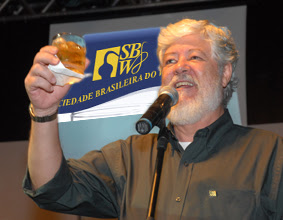
Este artigo, de autoria de Gavin Smith, foi publicado na revista dos Keepers of the Quaich. Dá uma boa idéia de como anda e como se estruturou o mercado brasileiro de whisky. Em breve sua tradução sairá na revista Whisky News da Sociedade Brasileira do Whisky
When ‘emerging markets’ for Scotch whisky are being discussed, the first three names to be mentioned are invariably China, Russia and India. However, Latin America also presents exciting opportunities, and no country in that continent offers more promise than Brazil.
According to David Williamson of the Scotch Whisky Association, “Brazil is one of the industry’s priority emerging markets. In 2005 it was Scotch whisky’s 10th largest export market by volume (equivalent of 24.7m bottles) and the 19th largest by value (£26m). Scotch whisky sales were up by 14 per cent in volume and five per cent in value compared to the previous year.
“Blended Scotch whisky accounts for 87 per cent of the Scotch whisky sold in Brazil by value, and 76 per cent by volume, while cane spirits - predominantly Cachaca - represent 80 per cent of the Brazilian spirits market.”
He continues, “Scotch whisky accounts for 60 per cent of the whisky sold and outsells local whiskies, which make up most of the remainder of the whisky category. While Scotch whisky only represents two per cent of the Brazilian spirits market, with a large population (185 million), a growing economy and more opportunities to purchase international spirits, it is clearly an area of future potential for Scotch whisky distillers.”
As The Edrington Group’s Paul Guerin says, “The macro factors are extremely encouraging, and Scotch whisky is still the premium spirit of choice for the growing middle and upper classes. We believe that the industry will continue to recruit more and more consumers as disposable income continues to grow.”
Nonetheless, a 20 per cent import tariff makes Scotch whisky less affordable to Brazilian consumers, and the State Sales Tax (ICMS) is complex, with rates varying from state to state and product to product. It also discriminates in favour of Cachaca, which is subject to a lower rate of taxation than imported spirits
Kleber Damasceno Prado is President of the Sociedade Brasileira do Whisky (The Whisky Society of Brazil), and he says “The interest of Brazilians for Scotch whisky (other than ‘expats’) started when Brazilian soldiers fighting in Northern Italy (some of whom had previously attended a training period in the US) returned home after V-Day in 1945. Hollywood also had its influence by the early 1950s.
“The standard blends make up most of the day to day consumption. Johnnie Walker is the top selling brand and some bar owners in Rio told me it accounts for almost 80 per cent of sales. The other international brands serve mainly to decorate the shelves.”
According to the International Wine & Spirit Record (2006), the leading blended Scotch whisky brands in Brazil are currently Johnnie Walker Black and Red Label, Teachers, Passport, White Horse and Ballantines.
A Diageo spokesperson notes that “Volume grew by 17 per cent in the year to the end of June 2006, and net sales, after deducting excise duties, by 21 per cent. In the Brazilian hub, which includes Paraguay and Uruguay, growth was driven by Scotch and ready to drink. Johnnie Walker grew net sales, after deducting excise duties, by 40 per cent. In Brazil, Johnnie Walker benefited from investment both above and below the line as Johnnie Walker Red Label’s share grew 3.4 percentage points and Johnnie Walker Black Label delivered share gains of 1.8 percentage points.”
Ralph Ottmueller, VP - Regional Director LATAM for Beam Global Spirits & Wine, notes that “Teacher’s has a 17.8 per cent share of the market in Brazil, according to the latest Nielsen audit, and we are selling approximately 450,000 cases per year. The brand has a remarkable consumer acceptance, particularly in the north-east area of the country and in Rio. The reason for the success is the combination of good quality, great taste and accessible price.
“Teacher’s is imported in bulk and locally bottled so it benefits from a lower taxation than Scotches bottled at source. This allows it to be marketed at a price 40 to 50 per cent lower than the leading bottled in Scotland brands, but still retaining the prestige of an imported brand. It fits perfectly with the profile of the north-east consumers, who have a laid back attitude and enjoy alcohol on a wide range of occasions. Teacher’s is consumed not only in prestige bars and restaurants but also outdoors at the beach, at music festivals and on every occasion when friends get together. “
Chivas Bros International PR Manager Jim Long says, “In Latin America Brazil is the big market for us, along with Venezuela. Overall, the region is doing well, and Brazil has mass – a big country that is very much Scotch whisky drinking. Chivas Regal is historically an extremely strong brand in Brazil, but we’re also doing well there with Something Special, which operates just below Chivas Regal, in what you might call the ‘top end standard’ category. Latin America is certainly a buoyant region, with results for the financial quarter of April to June this year showing a 51 per cent increase for Chivas brands there.”
Edrington’s Paul Guerlin considers that “The Latin American region represents one of the best and most immediate growth opportunities for the Group and Brazil is currently receiving sustained attention from our locally based commercial team. The Famous Grouse has found excellent acceptance in Brazil’s traditional on-premise sector, and our strategy is based on strong and imaginative activation at the point of sale.”
So much for blends, but what about single malts? Glenfiddich and Diageo’s Classic Malt range head the market, though, as Kleber Damasceno Prado explains, “When single malts are mentioned most people don’t really know what the term means, but recall one brand name - Glenfiddich.”
Glenfiddich’s Business Development Manager for Brazil is Andre Duarte, and he stresses that “At this moment single malt is a very small category in Brazil, representing less than one percent of total consumption, but we are just starting. Glenfiddich is leader and we sell more than 80 per cent of the single malt volume in Brazil.
“For Glenfiddich, Brazil is important because consumers there are more open to trying premium spirits than in other countries in Latin America. However, knowledge is very limited and there is a lot of confusion about single malt, blended malt and blended whisky. Another barrier to break down is the belief that single malt is stronger than blended whisky. There is a lot to teach and to do.”
Having chosen to drink whisky, just how do Brazilian consumers enjoy it? Kleber Damasceno Prado notes that “Most people take their drams on the rocks. In the north-east you can see coconut water added. And the ones who don’t really appreciate whisky add our local soda, guaraná, spoiling both.”
Andre Duarte adds that “Sixty per cent of the consumers drink whisky with ice, and in the north-east region - the biggest per capita and consumption area – 45 per cent drink it with coconut water. And the young consumer often mixes it with energy drinks like Red Bull.
“There is an interpretation that a single malt must be drunk neat, and I think that was a result of the consumption indication the industry used to give. Now we say “Drink in the way you enjoy most.”
Saturday, December 29, 2007

Thursday, December 13, 2007
A SOCIEDADE BRASILEIRA DO WHISKY
Entidade cultural sem fins lucrativos, fundada em 1988, reúne apreciadores desse divino néctar que o degustam em conjunto, sempre sob o mote: “O whisky será melhor apreciado se consumido com moderação”. Visite o site www.sbw.org.br
WHISKY – A MAIS NOBRE DAS BEBIDAS DESTILADAS
O Charme
Os mais diversos eventos sociais ao redor do mundo, de recepções de casamento a coquetéis comemorativos e a festas natalinas têm uma coisa em comum: se o objetivo for agradar ou impressionar os participantes o whisky será servido com toda a pompa e circunstancia. Mesmo nos dias de hoje onde, no Brasil ao menos, o vinho é a bebida da moda.
São diversas as razões desse prestígio, entre as quais pode-se destacar, alem do aroma e do sabor, a cor, a elegante embalagem, o charme trazido por Hollywood e o exotismo de seu país de origem: a fria Escócia.
Volume de Exportações
A exportação mundial de Scotch Whisky tem crescido regularmente e em 2006 ultrapassou a barreira de 1 bilhão de garrafas. Só no Brasil as vendas foram de 30 milhões de garrafas. Nosso país aparece em nono lugar atrás de França, Estados Unidos, Espanha, Tailândia, África do Sul, Venezuela, Coréia e Austrália, nesta ordem.
Paises Produtores
Outros paises também produzem essa bebida, como a Irlanda, onde historicamente se produziu whiskey pela primeira vez, antes mesmo da Escócia. Mais tarde imigrantes irlandeses e escoceses levaram o hábito e a tecnologia da destilação para o Canadá e os Estados Unidos. Grãos ricos em amido foram sempre as matérias primas, mas cada país passou a usar tipos distintos de grãos, conforme a disponibilidade local à época. Enquanto a Escócia e a Irlanda se valeram da cevada (maltada ou não), o Canadá deu preferência ao centeio e os Estados Unidos ao milho. Hoje, a maioria dos whiskies e whiskeys se vale de mais de um tipo de grão, mas se procura manter as características históricas conforme o país de origem.
Pode ser visto acima que existem duas maneiras de grafar a palavra: whisky e whiskey. Escócia e Canadá usam a primeira, enquanto a Irlanda e os Estados Unidos a segunda. A expressão deriva do termo celta “Uisge beatha”, significando Água da Vida.
Um pouco de História e de Estórias
A primeira vez em que há menção escrita da fabricação de whisky foi em 1494, ano significativo para os brasileiros, quando foi assinado o Tratado de Tordesilhas. Naquele mesmo ano o humilde frade John Cor recebia uma interessante autorização. Um lançamento em livro do fisco escocês (Scottish Exchequer Rolls) dizia "Eight bolls of malt to Friar John Cor wherewith to make aqua vitae". Ou seja o rei James IV autorizava o envio de oito “bolls” (ou cerca de 1.200 quilos) de cevada maltada para que o piedoso frei fizesse "aqua vitae". O frade Cor pertencia à Ordem dos Beneditinos na Abadia de Lindores (um pouco ao norte de Edinburgo, na divisa entre as Lowlands e as Highlands). Conta a tradição que essa solicitação se deveu ao rei resultou do primeiro contato do rei com a "aqua vitae" na ilha de Islay um ano antes, onde teria estado em campanha. Verdade ou mentira, trata-se da primeira menção escrita da destilação daquilo que muito mais tarde veio a ser chamado de Scotch Whisky.
Blended Whiskies e Malt Whiskies
Cerca de 95% do Whisky consumido no mundo são de Blended Whisky, ou whiskies misturados. Após o período de envelhecimento, a produção de diversas destilarias é combinada para formar as principais marcas consumidas no mercado. Os mais jovens são chamados Standards, e os que adormeceram de forma adequada por mais de 10 anos nos barris são os chamados Premium Whiskies. As principais marcas têm em sua fórmula mais de 40 componentes, entre whiskies de cevada maltada fabricados de forma semi-artesanal e whiskies de cereais não maltados produzidos industrialmente em larga escala.
Principais Marcas de Whisky
O gosto brasileiro se adaptou mais ao whisky escocês, o que não diminui a qualidade dos produtos dos outros paises. Até o Japão está produzindo whiskies de altíssima qualidade. O único ponto é que eles produzem whiskies “tipo escocês” enquanto os outros três são considerados produtores originais.
Eis algumas marcas consagradas:
· Standard Scotch Whiskies: Johnnie Walker Red Label (a marca mais vendida no mundo), JB, White Horse, Grant’s, Black & White, Famous Grouse, Dewar’s e aquele que seu tio trouxe na última viagem.
· Premium Scotch Whiskies: Johnnie Walker Black Label, Chivas Regal, Logan, Buchanan’s, Grant’s 12 anos
· Whiskeys Irlandeses: Jameson’s e Bushmill’s
· Whiskies canadenses: Canadian Club e Crown Royal
· Whiskey americanos: Jack Daniel’s do Tennessee e Four Roses e Jim Beam do Kentucky (os dois últimos denominados Bourbon Whiskeys).
Os mais diversos eventos sociais ao redor do mundo, de recepções de casamento a coquetéis comemorativos e a festas natalinas têm uma coisa em comum: se o objetivo for agradar ou impressionar os participantes o whisky será servido com toda a pompa e circunstancia. Mesmo nos dias de hoje onde, no Brasil ao menos, o vinho é a bebida da moda.
São diversas as razões desse prestígio, entre as quais pode-se destacar, alem do aroma e do sabor, a cor, a elegante embalagem, o charme trazido por Hollywood e o exotismo de seu país de origem: a fria Escócia.
Volume de Exportações
A exportação mundial de Scotch Whisky tem crescido regularmente e em 2006 ultrapassou a barreira de 1 bilhão de garrafas. Só no Brasil as vendas foram de 30 milhões de garrafas. Nosso país aparece em nono lugar atrás de França, Estados Unidos, Espanha, Tailândia, África do Sul, Venezuela, Coréia e Austrália, nesta ordem.
Paises Produtores
Outros paises também produzem essa bebida, como a Irlanda, onde historicamente se produziu whiskey pela primeira vez, antes mesmo da Escócia. Mais tarde imigrantes irlandeses e escoceses levaram o hábito e a tecnologia da destilação para o Canadá e os Estados Unidos. Grãos ricos em amido foram sempre as matérias primas, mas cada país passou a usar tipos distintos de grãos, conforme a disponibilidade local à época. Enquanto a Escócia e a Irlanda se valeram da cevada (maltada ou não), o Canadá deu preferência ao centeio e os Estados Unidos ao milho. Hoje, a maioria dos whiskies e whiskeys se vale de mais de um tipo de grão, mas se procura manter as características históricas conforme o país de origem.
Pode ser visto acima que existem duas maneiras de grafar a palavra: whisky e whiskey. Escócia e Canadá usam a primeira, enquanto a Irlanda e os Estados Unidos a segunda. A expressão deriva do termo celta “Uisge beatha”, significando Água da Vida.
Um pouco de História e de Estórias
A primeira vez em que há menção escrita da fabricação de whisky foi em 1494, ano significativo para os brasileiros, quando foi assinado o Tratado de Tordesilhas. Naquele mesmo ano o humilde frade John Cor recebia uma interessante autorização. Um lançamento em livro do fisco escocês (Scottish Exchequer Rolls) dizia "Eight bolls of malt to Friar John Cor wherewith to make aqua vitae". Ou seja o rei James IV autorizava o envio de oito “bolls” (ou cerca de 1.200 quilos) de cevada maltada para que o piedoso frei fizesse "aqua vitae". O frade Cor pertencia à Ordem dos Beneditinos na Abadia de Lindores (um pouco ao norte de Edinburgo, na divisa entre as Lowlands e as Highlands). Conta a tradição que essa solicitação se deveu ao rei resultou do primeiro contato do rei com a "aqua vitae" na ilha de Islay um ano antes, onde teria estado em campanha. Verdade ou mentira, trata-se da primeira menção escrita da destilação daquilo que muito mais tarde veio a ser chamado de Scotch Whisky.
Blended Whiskies e Malt Whiskies
Cerca de 95% do Whisky consumido no mundo são de Blended Whisky, ou whiskies misturados. Após o período de envelhecimento, a produção de diversas destilarias é combinada para formar as principais marcas consumidas no mercado. Os mais jovens são chamados Standards, e os que adormeceram de forma adequada por mais de 10 anos nos barris são os chamados Premium Whiskies. As principais marcas têm em sua fórmula mais de 40 componentes, entre whiskies de cevada maltada fabricados de forma semi-artesanal e whiskies de cereais não maltados produzidos industrialmente em larga escala.
Principais Marcas de Whisky
O gosto brasileiro se adaptou mais ao whisky escocês, o que não diminui a qualidade dos produtos dos outros paises. Até o Japão está produzindo whiskies de altíssima qualidade. O único ponto é que eles produzem whiskies “tipo escocês” enquanto os outros três são considerados produtores originais.
Eis algumas marcas consagradas:
· Standard Scotch Whiskies: Johnnie Walker Red Label (a marca mais vendida no mundo), JB, White Horse, Grant’s, Black & White, Famous Grouse, Dewar’s e aquele que seu tio trouxe na última viagem.
· Premium Scotch Whiskies: Johnnie Walker Black Label, Chivas Regal, Logan, Buchanan’s, Grant’s 12 anos
· Whiskeys Irlandeses: Jameson’s e Bushmill’s
· Whiskies canadenses: Canadian Club e Crown Royal
· Whiskey americanos: Jack Daniel’s do Tennessee e Four Roses e Jim Beam do Kentucky (os dois últimos denominados Bourbon Whiskeys).
Monday, December 10, 2007
PRONUNCIA GAELICA
Sempre que vemos escritas duas palavras em Gaelico, SLAINTE MHATH ([Tenha] Boa Saúde) E USGE BAUGH (Agua da Vida: Whisky) ficamos em dúvida qual a pronúncia correta. Um documentário sobre a Malt Whisky Trail narrado em inglês por um legítimo representante das Highlands pôde elucidar essa intrigante questão.
Eis as pronúncias (em português)mais aproximadas: “SLÓONDGE VÁ!” e “ÜSHKA –BÊA”.
(Publicado no Whisky News)
Eis as pronúncias (em português)mais aproximadas: “SLÓONDGE VÁ!” e “ÜSHKA –BÊA”.
(Publicado no Whisky News)
AVE CANEM
Vinícius de Moraes contemplava seu whisky bem servido, pensativo.
Depois de algum tempo se virou para o eterno companheiro de copo e boemia, o consagrado jornalista e compositor Antônio Maria:
– Ô Maria, você sabe de uma coisa? Cheguei à conclusão que o whisky é o melhor amigo do homem. Não reclama, nos alegra quando estamos tristes, nos dá inspiração nos ajuda a dormir em noites de insônia, faz as pessoas ficarem mais inteligentes ...
– Mas Vinícius, o melhor amigo não é o cachorro?
– Pois então o whisky é o cachorro engarrafado!
Essa história pode ou não ser verdadeira, mas o próprio Vinícius sempre a contava. Inclusive no famoso show que fez já no final da vida em companhia de Tom Jobim, Miucha e Toquinho no Canecão.
O que pouca gente sabia é que o grande poetinha escreveu um soneto intitulado Ave Canem, no qual abordou o assunto com a genialidade tão sua característica. Nosso amigo Ciro Navajas, diretor da Associação Brasileira dos Colecionadores de Whisky, obteve com um professor de literatura da USP uma cópia impressa do mesmo, que saiu publicado no Dose Dupla, newsletter da ABCW.
Com a sua permissão transcrevemos a seguir essa preciosidade:
O cão é o afeto em quatro patas
Amigo na alvorada ou noite escura
Pois ainda que faminto, a fuçar latas
Fiel nos segue em dita ou desventura
É chama e é sombra, paz e alerta
Renúncia consentida, amor doado
Lealdade que não falta na hora incerta
É luz de quem não vê, cego ou extraviado
Arrimo igual, irmão, só na bebida
Naquele "twelve years" especialmente
É tudo que ora digo, face erguida
Qual sóbrio porta-voz da boêmia gente
E lanço, copo á mão, novo ditado:
"O uísque é o cão engarrafado"
(Publicado no Whisky News )
Depois de algum tempo se virou para o eterno companheiro de copo e boemia, o consagrado jornalista e compositor Antônio Maria:
– Ô Maria, você sabe de uma coisa? Cheguei à conclusão que o whisky é o melhor amigo do homem. Não reclama, nos alegra quando estamos tristes, nos dá inspiração nos ajuda a dormir em noites de insônia, faz as pessoas ficarem mais inteligentes ...
– Mas Vinícius, o melhor amigo não é o cachorro?
– Pois então o whisky é o cachorro engarrafado!
Essa história pode ou não ser verdadeira, mas o próprio Vinícius sempre a contava. Inclusive no famoso show que fez já no final da vida em companhia de Tom Jobim, Miucha e Toquinho no Canecão.
O que pouca gente sabia é que o grande poetinha escreveu um soneto intitulado Ave Canem, no qual abordou o assunto com a genialidade tão sua característica. Nosso amigo Ciro Navajas, diretor da Associação Brasileira dos Colecionadores de Whisky, obteve com um professor de literatura da USP uma cópia impressa do mesmo, que saiu publicado no Dose Dupla, newsletter da ABCW.
Com a sua permissão transcrevemos a seguir essa preciosidade:
O cão é o afeto em quatro patas
Amigo na alvorada ou noite escura
Pois ainda que faminto, a fuçar latas
Fiel nos segue em dita ou desventura
É chama e é sombra, paz e alerta
Renúncia consentida, amor doado
Lealdade que não falta na hora incerta
É luz de quem não vê, cego ou extraviado
Arrimo igual, irmão, só na bebida
Naquele "twelve years" especialmente
É tudo que ora digo, face erguida
Qual sóbrio porta-voz da boêmia gente
E lanço, copo á mão, novo ditado:
"O uísque é o cão engarrafado"
(Publicado no Whisky News )
Bem vindos!!!
É uma grande alegria usar este espaço para dividir opiniões e informações sobre o mundo dos destilados.
Neste blog vou publicar, além de novos artigos, alguns que os amigos da SBW já conhecem do nosso Whisky News, publicação mensal da Sociedade.
Espero que seja um prazer tão grande para os leitores quanto está sendo para mim.
Slainte Mhath!! (Em gaélico, [Tenha] Boa Saúde)
Neste blog vou publicar, além de novos artigos, alguns que os amigos da SBW já conhecem do nosso Whisky News, publicação mensal da Sociedade.
Espero que seja um prazer tão grande para os leitores quanto está sendo para mim.
Slainte Mhath!! (Em gaélico, [Tenha] Boa Saúde)
Subscribe to:
Comments (Atom)